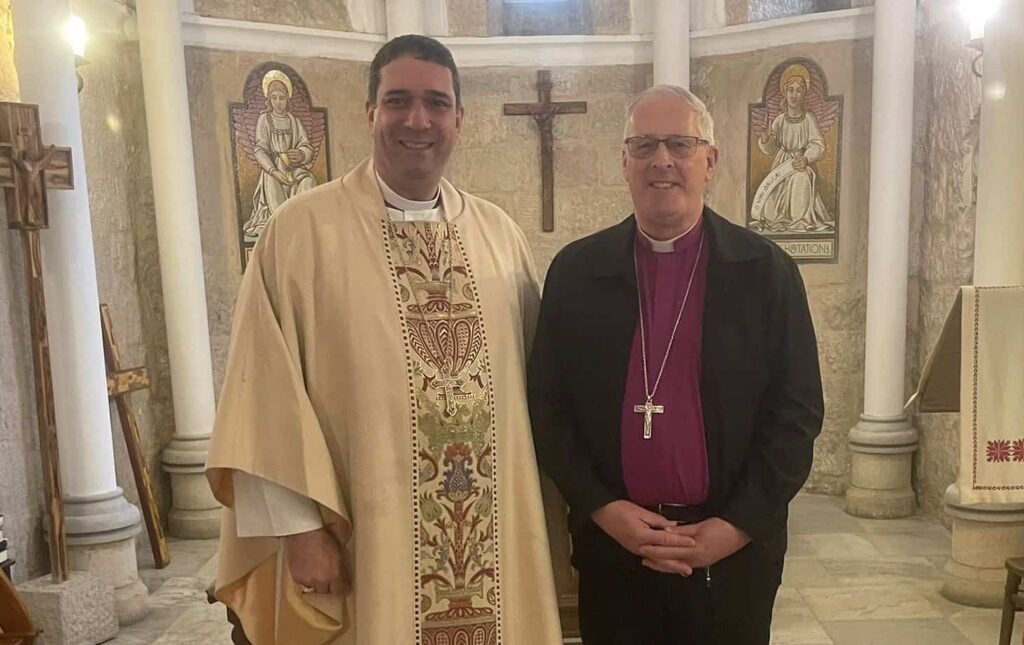


The Diocese of Southwark has been linked with the Diocese of Jerusalem since January 2021. We pray for and visit each other, and wherever possible people from the Diocese of Southwark offer financial help to those in need in the Diocese of Jerusalem.
The schools and other institutions run by the Diocese of Jerusalem work hard to ensure that the students they are responsible for have the best possible opportunities. This is often difficult, especially with the current challenges and ongoing situation in Jerusalem and the Middle East. Despite the difficulties, they have worked hard to ensure that their educational institutions continue to offer as much help as possible to those who are in need.
One institution is The Holy Land Institute for the Deaf (HLID). Located in the city of Salt in Jordan – which is the southeastern-most country of the diocese – HLID has been a pioneering institute for the rehabilitation, education, and training of people who are deaf, hard-of-hearing, and deafblind since 1964. The first institute of its kind to be founded in the region, the HLID serves as a regional leader in providing high-quality services, fostering inclusivity and enabling individuals to lead independent and fulfilling lives.
Their mission is to enable people who are deaf, hard-of-hearing, and deafblind and their families to meaningfully participate in their communities while making valuable contributions to an inclusive society. The Institute seeks to develop and provide comprehensive, high-quality, and efficient services on a local, national and regional level, covering education, audiology, vocational training, teacher development, and inclusive community programmes.

The HLID has a school for children who are deaf and deafblind, where anyone can attend from nursery up to secondary education. The Institute serves approximately 150 male and female students from the ages of two to 20. Students at the Institute are taught Jordanian Sign Language and all curriculum subjects taught in other schools. They also offer vocational training, which helps students to gain skills in sewing, ceramics, carpentry, hospitality, and other skills that will help them to gain employment. Some of those educated at the HLID progress to studying at college or university, which helps to ensure that they have the best possible opportunities. Many return to the Institute as qualified teachers and to continue the inspiring work that the Institute undertakes.
The Sign Language Department teaches Jordanian Arabic Sign Language and offers training for teachers, families, and professionals in sign language communication. They also offer regional training for teachers and technicians, including in Iraq.
The Deafblind Department was founded in 2011. The department’s motto is: ‘Beyond Sight and Sound, we Find Strength’, and this focuses all the work that they do in seeking to enhance the children and young people’s communication, accessibility, and independence. It is also possible for children to board at the Institute. The structured programme that they undertake offers personalised education and communication training, help with independent living and mobility skills, social and emotional development and therapeutic support, as well as helping them to use technology to assist with the challenges of living as a deafblind person.
Since 2022 the Deafblind Outreach Programme run by the HLID has been brining support for deafblind children and young people directly into their communities. The aim is to help to bridge the gap between parents and children, to provide home based education and therapy to enhance daily life skills, to engage the families in the learning process to help to ensure long-term development, and to enable the children and young people to explore larger environments beyond their homes.
The work has continued to grow and develop since it began 62 years ago. In 2012, the HLID began to work with Syrian refugees, and it has been at the forefront of providing rehabilitation, education, and special support services in the Za’atari and Azraq refugee camps for those refugees with disabilities and their families. Their programmes ensure that children and young people with disabilities receive the care, education and empowerment needed to overcome any challenges of displacement.
The work of the Institute has wide ranging effects on the students and their families and we hope that you will feel able to support the work as part of your Lenten discipline this year.