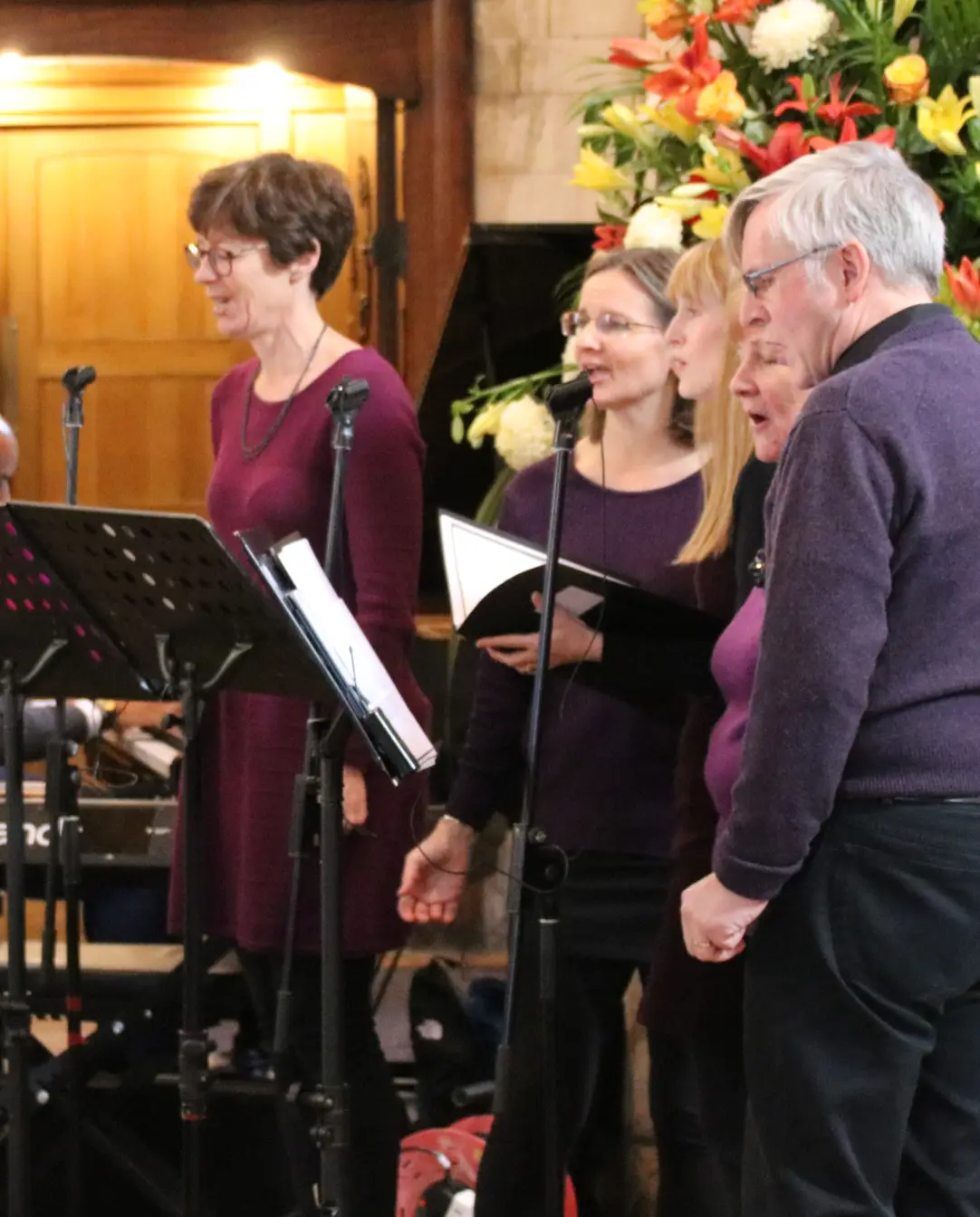


In March, The Bishop of Southwark led an Ecumenical Pilgrimage to Rome and Assisi with our brothers and sisters from the Archdiocese of Southwark.
Click here to see the photos on Flickr
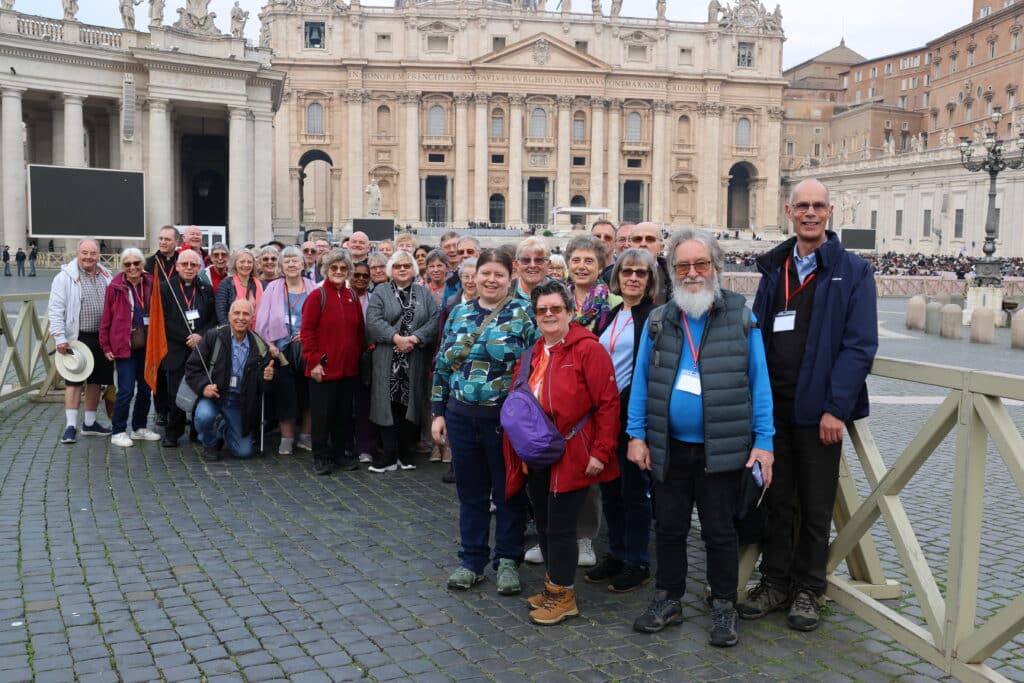

Bishop Christopher writes
The pilgrims were led by Bishop Paul Hendricks who is an Auxiliary Bishop in the Archdiocese of Southwark, Canon Michael Branch the Dean of St George’s Cathedral, our own Dean of Southwark, and myself. I am also glad that Bishop Rosemarie was among our happy band of pilgrims drawn from our two dioceses. In Rome we visited the late Pope Francis’s tomb in the basilica of St Mary Major. It is the simplest of all the papal tombs – just a plain stone laid flat, with ‘Franciscus’ inscribed on it. Above the tomb is a cross, depicting Christ the Good Shepherd. It was very moving to pray there and see this simple witness to a Christian life lived not for the love of power – which has no place whatsoever in the Kingdom of God – rather proclaiming the power of God’s love. In Assisi there was also utter simplicity as we joined the throng of pilgrims venerating the mortal remains of St Francis – Il Povarello – as we approach the 800th anniversary of his death.
We alternated Eucharistic celebrations by rite – Roman Catholic and Anglican – to enable the highest possible level of communion and sacramental fellowship within our respective disciplines. When the Eucharist was celebrated according to the Roman rite, Anglicans made their communion from a reserved sacrament consecrated according to our rites, and vice versa. Together we proclaimed that Christ has died, Christ is Risen, and Christ will come again. Our pilgrimage was blessed in many ways. Friendships were formed and we experienced the reality of spiritual ecumenism – taking us beyond the institutional dialogue between Churches in the long search for unity to the joy of praying and journeying together along the pilgrim way, mindful that Jesus prayed for his disciples, ‘that they may all be one’.
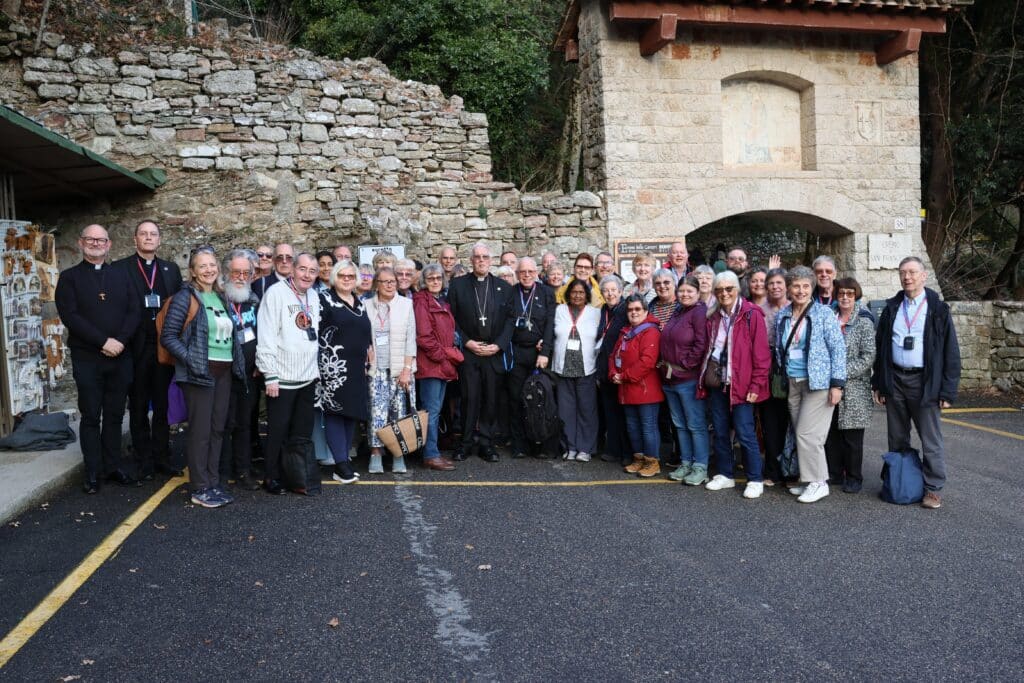

Canon Michael Branch, Dean of St George’s Cathedral, writes
I recently returned from an ecumenical pilgrimage to Rome and Assisi with clergy and parishioners of both St George’s and Southwark’s Anglican cathedral. As we visited Rome’s four great basilicas and viewed the relics of St Francis in Assisi, the sense of community we felt taught me that, while maintaining the integrity of our respective Anglican & Catholic beliefs, we must come together in a world experiencing many horrors.
We Christians cannot afford to use the incendiary language and divisiveness of present-day politics. In Rome we saw Pope Leo XIV, whose Latin title, Pontifex, carries the meaning of bridge-building between faiths. His Prefect of the Dicastery for Promoting Christian Unity, Cardinal Kurt Koch, put it well.
“Ecumenism can assist society if it does not mirror society’s discord, but is rather itself a sign of unity,” the Cardinal explained. In a world full of opposing currents, Christians are challenged to live “in one Spirit” despite diversity. “If Christianity itself is a divided heap, then it cannot offer society very much,” the Cardinal concluded.
We ended the pilgrimage feeling enriched by being together. We share a common heritage – what has been described as “a real but imperfect communion”. Or a living heritage, as this journal’s title calls it.
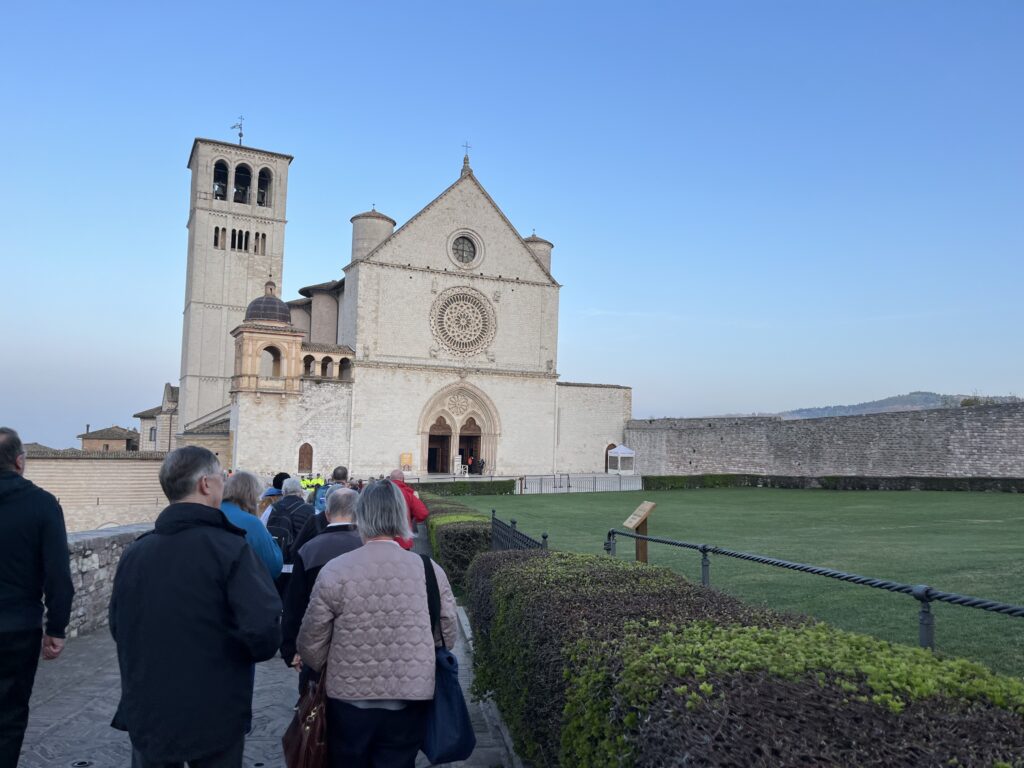
Bishop Rosemarie writes
I began the ecumenical pilgrimage uncertain of what to expect, as it was my first time travelling with a large group to places of deep religious significance. Walking in the footsteps of St Paul, St Peter in Rome and St Francis, and St Clare in Assisi truly deepened and enriched my knowledge and understanding of these saints and their journeys in faith.
A highlight was preaching at the Church of San Damiano—where St Francis discerned his call and St Clare founded her community—on International Women’s Day. Standing in a place central to the history of female religious life made the moment especially meaningful.
While the sites themselves were profound, the shared worship, reflection, humour, and challenge really shaped the journey. My lasting memory is not only of Italy’s sacred heritage but of the companionship that defined the experience.
Wendy, our Director of Discipleship, Lay Ministry and Continuing Ministerial Education, writes
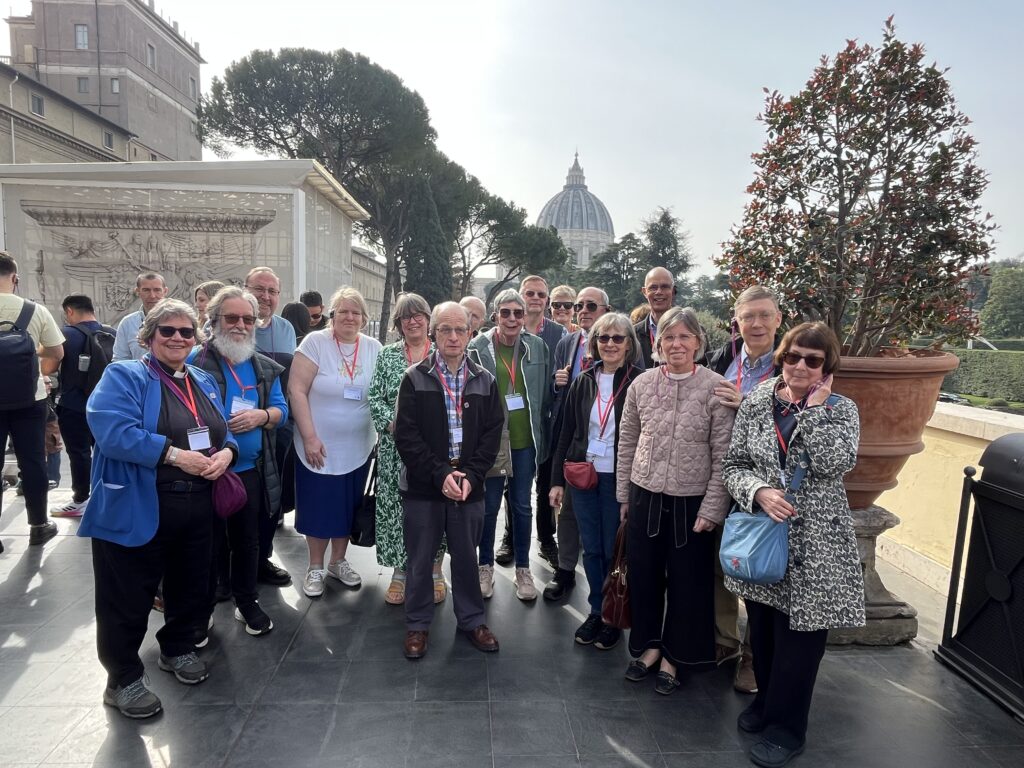
The last three Diocesan Pilgrimages have been Ecumenical Pilgrimages with our brothers and sisters from the Archdiocese of Southwark – the first two of these were to the Holy Land. As this was not possible this year we travelled to Rome and Assisi in what is the year of the 800th anniversary of St Francis’ death. Led by Bishop Christopher, Bishop Paul Hendricks the Auxiliary Bishop for the Kent Area, the Dean of Southwark, The Very Revd Mark Oakley and the Dean of St George’s Cathedral Canon Michael Branch 44 Pilgrims set off from Stansted Airport on Monday 2 March.
Rome was an especially busy time as there is so much to see and do there. An absolute highlight was the public audience with the Pope on Wednesday morning where the Southwark Pilgrims got a mention which led to much jubilation. We spent four nights in Rome and then moved onto Assisi, seeing the beautiful city and churches there.
My favourite Church in Rome was St Paul Outside the Wall. It reminded me of the Church of All Nations in Jerusalem. Its clean lines and beautiful paintings left me stunned as does the Church of All Nations. It also reminded me of the horror of the war happening all around the Church in Jerusalem and elsewhere and led me to stop and pray in St Paul’s for peace in our world.
In Assisi, it was a privilege to preach in the Basilica of St Clare and to see San Damiano where St Francis was told to go and mend the church which had fallen into ruin and the Hermitage to which St Francis would retreat and in which St Clare and the Poor Clare’s lived.
The Spiritual Ecumenism (as Bishop Christopher described it) of visiting and worshipping in such holy places with our friends from the Archdiocese brought new insights and great joy to us all as did seeing new places and getting to know new people with whom we shared so much despite our different traditions.


